*:first-child]:mt-0 [&_>*:last-child]:mb-0"> In 1971, Watergate was still just a hotel, NASA was preparing Apollo 15 , and a small Oregon distributor named Blue Ribbon Sports quietly took its first step toward becoming Nike .
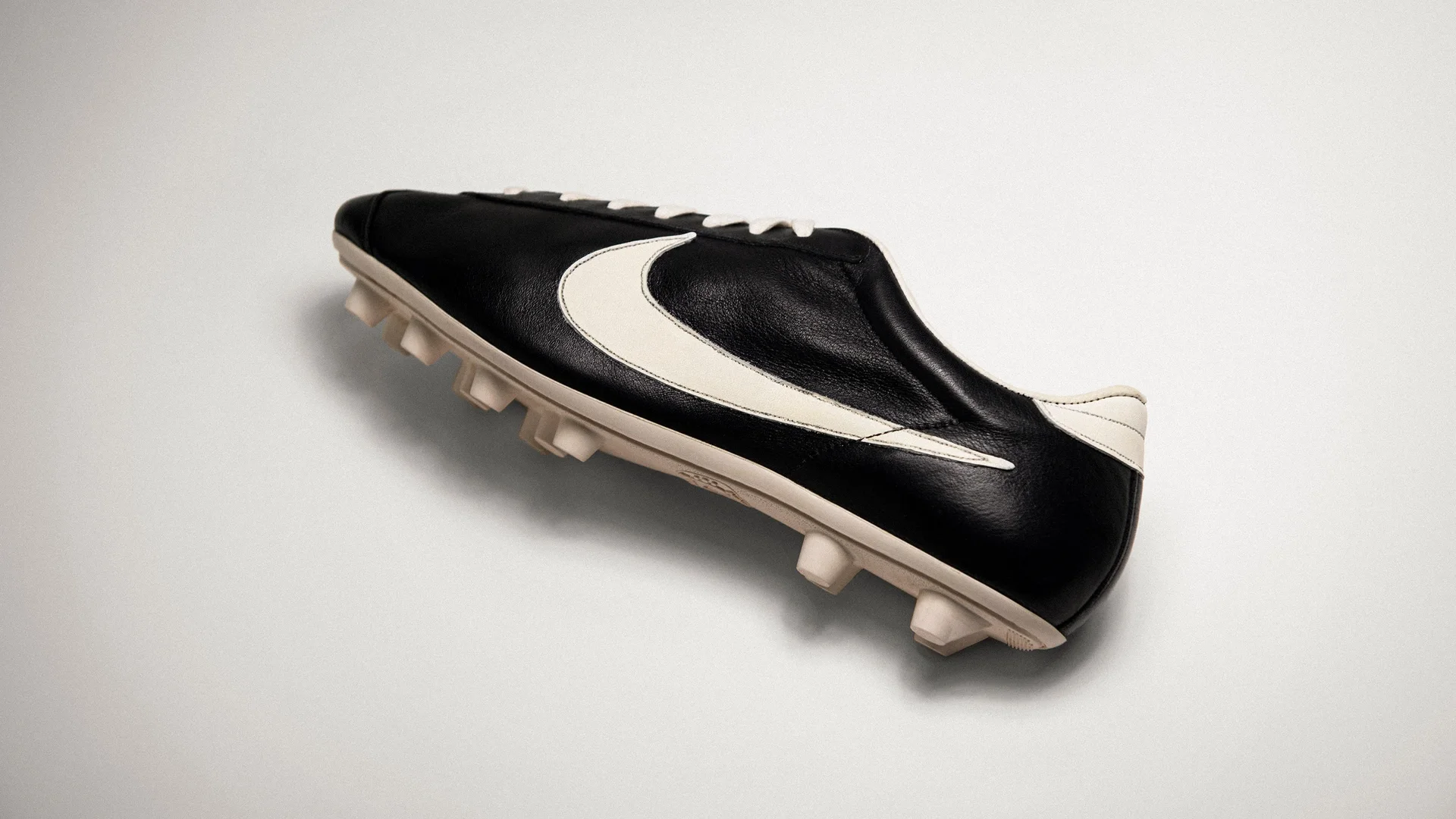
That year, the company sold its first in house shoe: a black football boot simply called “the Nike” , priced at $16.95 and distinguished by a new, checkmark shaped stripe that few noticed at the time but which would outlive the boot and eventually define the brand.
*:first-child]:mt-0 [&_>*:last-child]:mb-0"> From Blue Ribbon Sports to Nike *:first-child]:mt-0 [&_>*:last-child]:mb-0"> In the late 1960s and early 1970s, Phil Knight and Bill Bowerman were still operating under the name Blue Ribbon Sports (BRS) , acting primarily as a U.S.
distributor for Japanese Onitsuka Tiger running shoes. As contracts with Onitsuka began to wind down, Knight realised the company’s future could not depend on someone else’s product or identity. To grow, BRS needed its own shoe and its own mark .
In February 1971, Knight contracted a factory in Mexico to produce a black soccer/football cleat with a white sole, a model that needed to look clearly different from Onitsuka designs. That requirement to distinguish the shoe visually from competitors was what led him to seek a unique brand stripe.
*:first-child]:mt-0 [&_>*:last-child]:mb-0"> Enter Carolyn Davidson and a $35 logo *:first-child]:mt-0 [&_>*:last-child]:mb-0"> To create this new mark, Knight turned to Carolyn Davidson , a graphic design student he had met while teaching accounting at Portland State University…