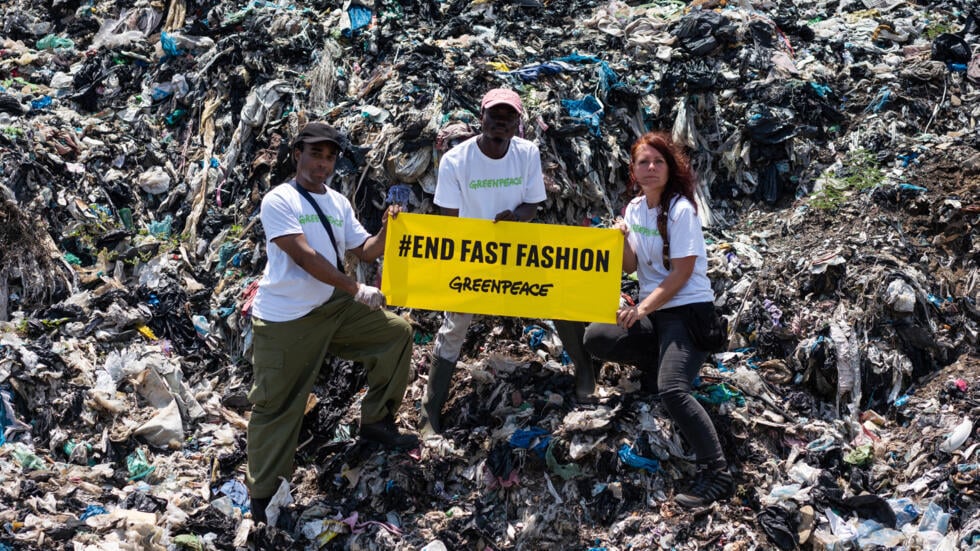
A new report by Greenpeace Africa and Greenpeace Germany has exposed the alarming environmental and public health impacts of the global second-hand clothing trade in Ghana.
The report, titled "Fast Fashion, Slow Poison: The Toxic Textile Crisis in Ghana," highlights how discarded clothing from the Global North is turning parts of Ghana into a dumping ground for fast fashion waste.
clothes are unsellable. The result is massive textile waste ending up in informal dumpsites or burned in public washhouses, leading to severe contamination of air, soil, and water resources, putting the health of local communities at risk.
Key Findings from the Greenpeace Report Air Pollution : Air samples from public washhouses in Accra’s Old Fadama settlement show dangerously high levels of toxic substances in indoor air, including carcinogens like benzene and polycyclic aromatic hydrocarbons (PAHs).
Plastic Pollution : Infrared testing of discarded clothing revealed that nearly 90% are made of synthetic fibers like polyester, contributing to the spread of microplastics in the environment.
Environmental Degradation : The accumulation of textile waste is smothering natural habitats, polluting rivers, and leading to the creation of ‘plastic beaches’ along the coast. The Voices on the Ground "This report is a wake-up call," said Hellen Dena , Greenpeace Africa’s Pan-African Plastics Lead…